
When comparing different vape devices, one question appears again and again:
What is the difference between a rechargeable and a non-rechargeable vape?
At first, the answer seems simple. One can be charged, while the other cannot.
But battery design can also affect how a device delivers power, how advertised puff counts are supported, what happens when the battery becomes low, and how users should interpret device specifications.
Another common source of confusion is the difference between rechargeable and refillable. These terms describe completely different features.
This guide explains rechargeable vs non-rechargeable vape devices in straightforward terms, including battery design, puff counts, coil performance, charging, device lifespan and important battery-safety considerations.
Quick Answer: A rechargeable vape has a battery designed to receive additional charge through a supported charging port. A non-rechargeable vape relies on its original battery charge. Rechargeable does not necessarily mean refillable, and a higher advertised puff count does not guarantee a specific number of draws.
What Is a Rechargeable Vape?
A rechargeable vape contains a built-in battery that is designed to receive additional charge through a manufacturer-supported charging port.
Many newer devices use USB-C, although the exact charging system depends on the product.
Rechargeability is particularly common in devices advertised with larger e-liquid capacities or higher puff counts.
The reason is relatively straightforward: the usable e-liquid and coil life may extend beyond what one small initial battery charge could support.
Instead of increasing the physical battery size substantially, a manufacturer may use a rechargeable battery system.
However, one distinction is extremely important:
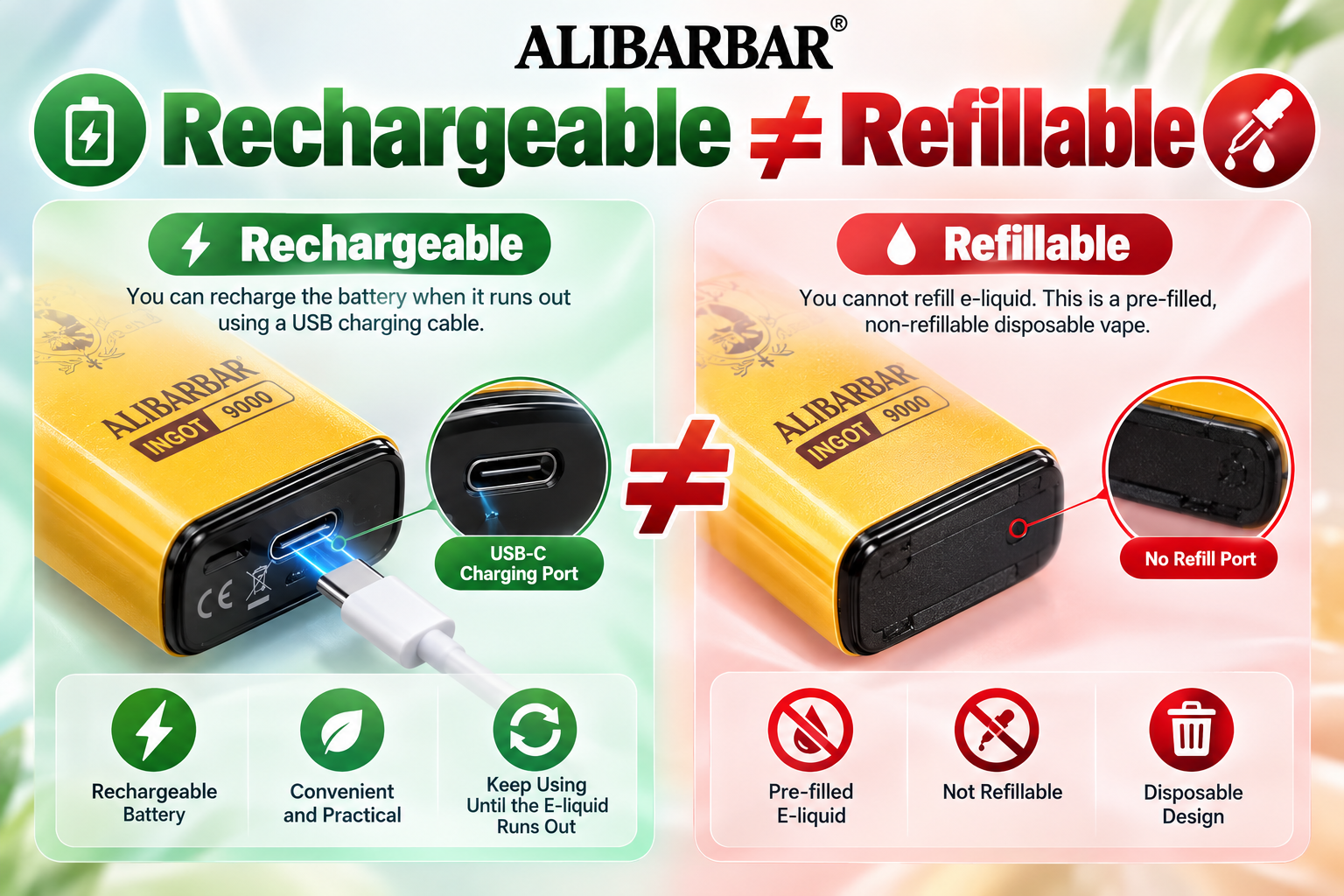
Rechargeable Does Not Mean Refillable
These two terms refer to different parts of the device.
Rechargeable = Battery
The battery can receive additional charge.
Refillable = E-liquid
Additional e-liquid can be added to the device.
Therefore, a device can be:
Rechargeable but not refillable.
Some disposable-style devices have charging ports while their e-liquid systems remain sealed.
A charging port should never be interpreted as permission to open, refill or modify a sealed device.
What Is a Non-Rechargeable Vape?
A non-rechargeable vape uses a built-in battery that is not designed to receive additional charge.
There is normally no external charging port.
The device operates using its original battery capacity until the battery, e-liquid, coil or another component reaches the end of its usable life.
Compared with rechargeable designs, there are fewer charging-related specifications to consider.
However, users should never attempt to open a sealed non-rechargeable device and connect directly to its internal battery.
Lithium-ion batteries can present fire and injury risks when damaged, punctured, short-circuited or improperly charged.
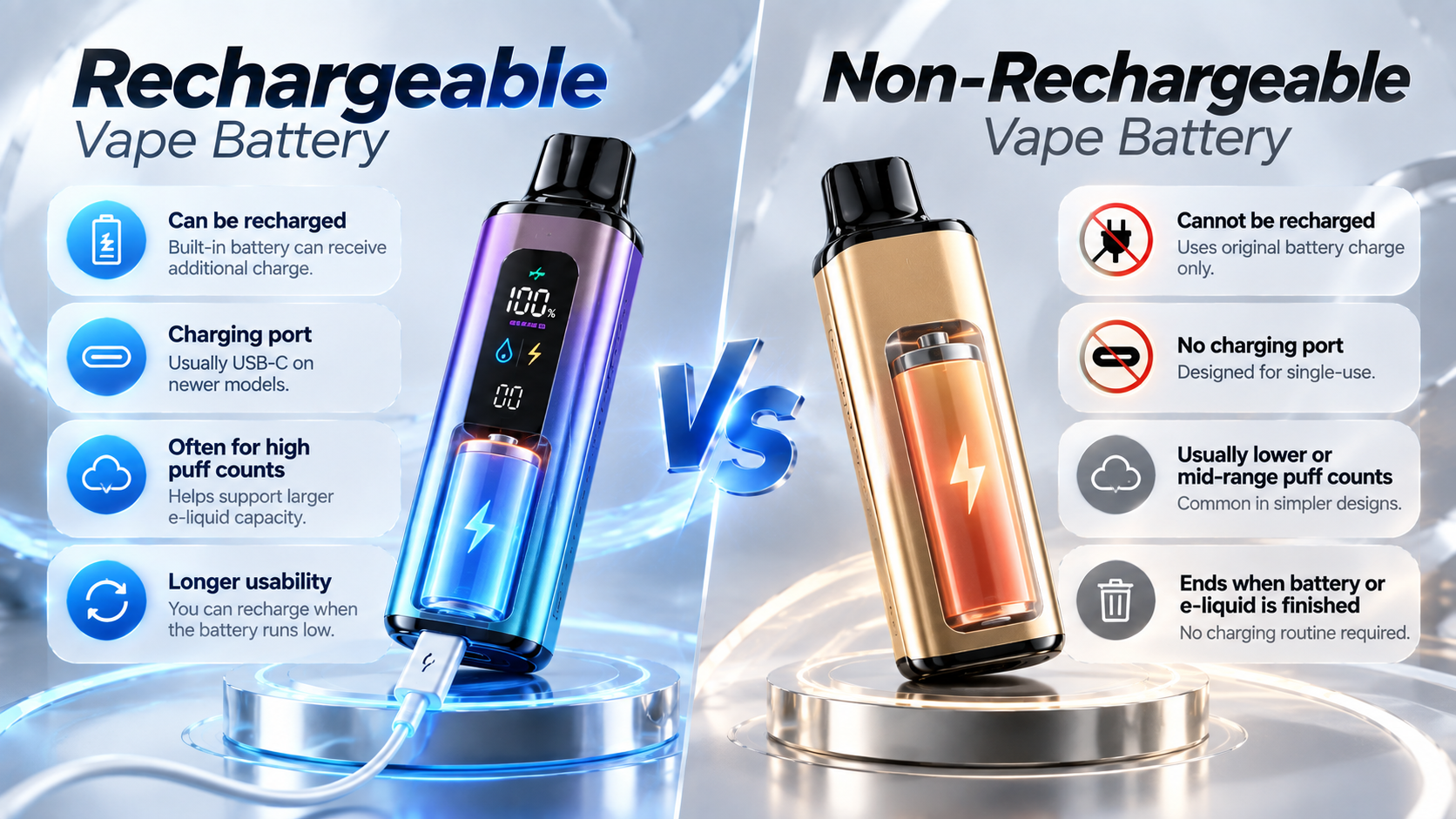
Rechargeable vs Non-Rechargeable Vape
Here is a simple comparison:
| Feature | Rechargeable Vape | Non-Rechargeable Vape |
|---|---|---|
| Battery | Designed to receive additional charge | Uses original battery charge |
| Charging Port | Usually included | Normally absent |
| Puff Count | Often associated with higher advertised counts | Common in lower/mid-range designs |
| Charging Routine | Requires appropriate charging | No charging required |
| Low Battery | Battery may be recharged | Device may stop operating |
| E-liquid | May still be sealed | Usually sealed |
| End of Life | Can occur when liquid, coil or battery is finished | Battery, liquid or coil determines usable life |
| Battery Checks | Port, cable, heat and charging behaviour | Physical damage, heat and battery behaviour |
The biggest difference is therefore the battery system, not necessarily the e-liquid system.
Does Rechargeable Mean a Vape Lasts Longer?
Not automatically.
Rechargeable devices are often associated with higher advertised puff counts because their batteries can receive additional charge.
However:
Rechargeable ≠ unlimited lifespan.
Charging restores battery energy. It does not replace:
- E-liquid
- Coil
- Wick
- Internal components
If the e-liquid has been depleted or the coil has reached the end of its usable life, charging the battery cannot restore those components.
This is why a rechargeable device can still reach the end of its usable life even when its battery continues to charge normally.
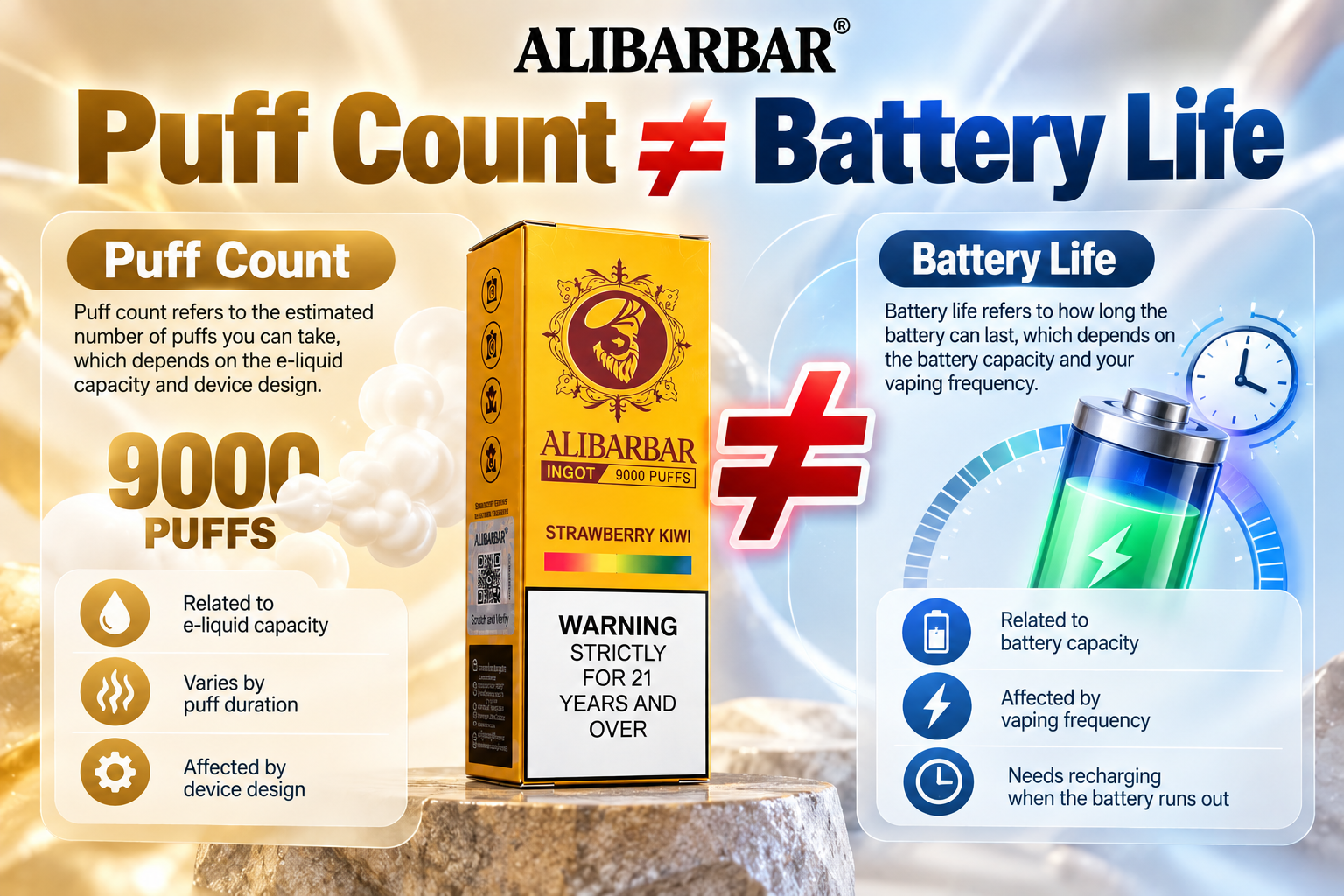
Understanding Vape Puff Counts
Advertised puff count is another specification that can easily be misunderstood.
Numbers such as:
3,500 Puffs
9,000 Puffs
12,000 Puffs
20,000 Puffs
should generally be understood as manufacturer-rated estimates rather than guaranteed numbers of individual draws.
Actual usage can vary according to factors such as:
- Draw duration
- Draw intensity
- Frequency of use
- Airflow
- Coil design
- Battery output
- Operating mode
- Device configuration
A person taking longer draws may experience a different total number of puffs from someone taking shorter draws.
Therefore:
Higher Puff Count ≠ Guaranteed Longer Real-World Usage
Does a Rechargeable Vape Produce More Vapour?
Not simply because it is rechargeable.
Vapour production depends on several parts of the device working together.
These can include:
Battery output + Coil design + Airflow + E-liquid delivery + Device power
A rechargeable battery may help maintain usable electrical output after the battery has been recharged, but the charging feature itself does not automatically mean stronger vapour production.
A well-designed non-rechargeable device can also provide consistent output during its intended operating life.
Battery Level and Flavour Consistency
Battery condition can influence the experience of an electronic vaping device.
When battery output becomes insufficient, vapour production may decrease.
Depending on the device, users may notice:
- Reduced vapour
- Different indicator behaviour
- Device not activating normally
- Reduced performance
With a rechargeable device, recharging may restore battery output if low battery charge is actually causing the problem.
But charging cannot solve every performance issue.
Reduced output may also result from:
- Low e-liquid
- Coil deterioration
- Wick condition
- Airflow obstruction
- Internal device problems
This distinction is useful when troubleshooting a rechargeable device.
Coil Design Matters Too
Battery type is only one part of vape performance.
The coil converts electrical energy from the battery into heat.
Different products may use:
- Standard coils
- Mesh coils
- Dual-mesh systems
- Other coil configurations
Mesh designs are commonly used because the heating surface can be distributed differently compared with some conventional wire-coil designs.
But coil terminology alone should not be used to predict the entire experience.
Battery output, airflow and liquid delivery also matter.
What Specifications Should You Compare?
When trying to understand two different devices, don't compare puff count alone.
Look at the complete specification.
1. Battery Capacity
Usually expressed in mAh.
For example:
650mAh
1000mAh
2000mAh
Battery capacity is one factor affecting how much electrical energy a battery can store.
2. Rechargeable or Non-Rechargeable
Check whether the manufacturer actually designed the device to be recharged.
Never assume a device is rechargeable simply because similar-looking models have charging ports.
3. Charging Port
For rechargeable products, check the specified charging connection.
USB-C is common on newer electronics, but the manufacturer's documentation should determine the appropriate charging method.
4. Advertised Puff Count
Use this as a product specification rather than a guaranteed usage figure.
5. E-Liquid Capacity
Battery capacity and e-liquid capacity are different measurements.
A large battery does not automatically mean a large e-liquid capacity, and vice versa.
6. Coil Design
Look at whether the device uses a standard, mesh or other coil system.
7. Airflow
Airflow design can influence draw resistance and device performance.
Looking at these specifications together gives a much clearer picture than simply asking:
“Which one has more puffs?”
Rechargeable Vape Battery Safety
Any device containing a lithium-ion battery should be treated carefully.
If a vape is designed to be rechargeable, follow the charging instructions provided for that particular product.
Basic Charging Checks
Keep the charging port clean and dry.
Avoid using visibly damaged charging cables.
Do not force an incompatible connector into the charging port.
Do not puncture or dismantle the device.
Do not attempt to repair the internal battery of a sealed product.
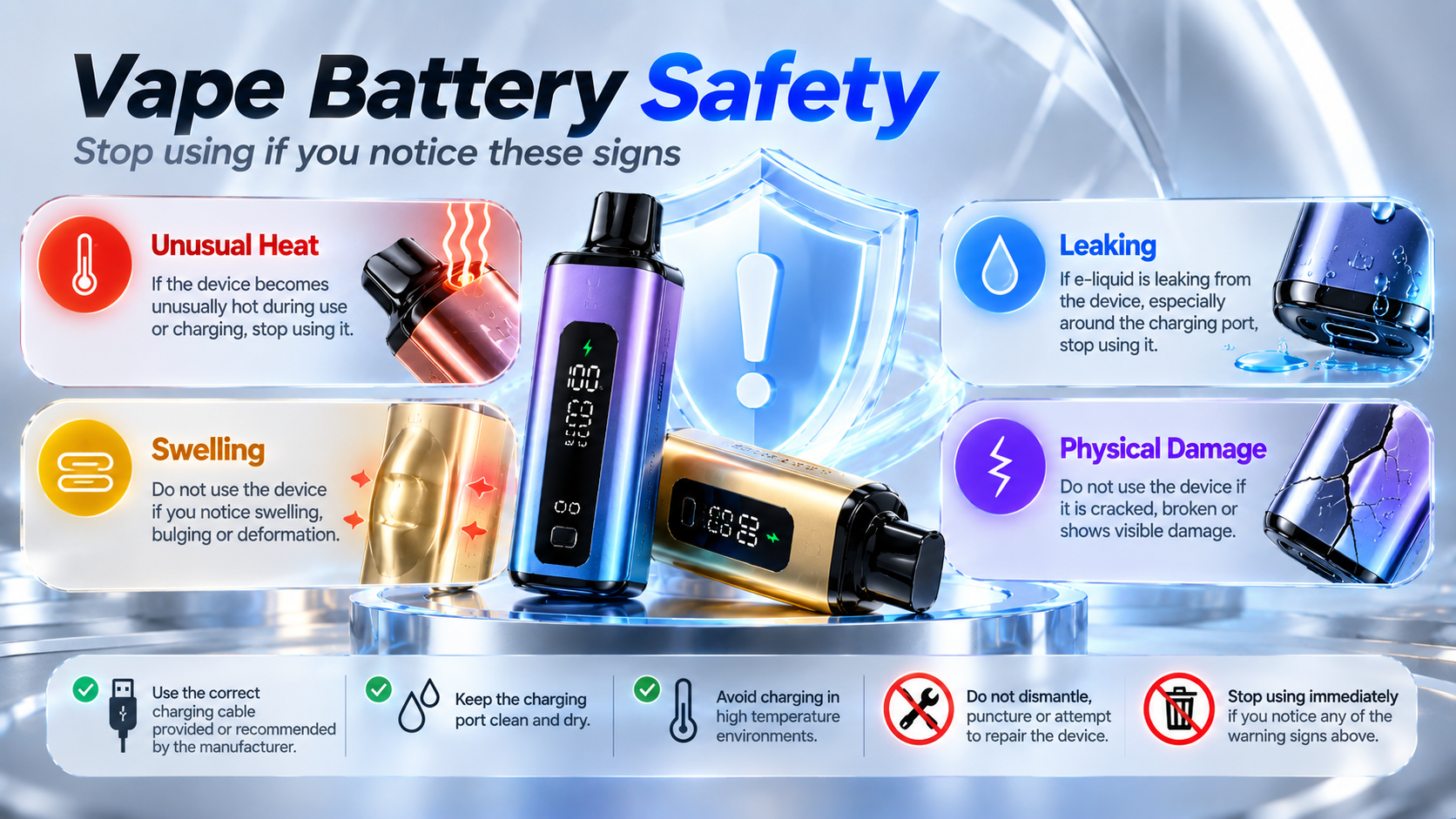
Stop Using the Device If You Notice:
Unusual heat
Some warmth during operation can occur in battery-powered electronics, but excessive or unexpected heat deserves attention.
Swelling
A swollen battery or distorted device housing can indicate a battery problem.
Leaking
Liquid around electrical components or the charging port can create additional problems.
Physical damage
A device that has been crushed, punctured or severely damaged should not continue to be used.
Unusual chemical smell
An unexplained strong chemical or burning smell can indicate a device or battery problem.
If any of these signs appear, stop using or charging the device.
Can You Recharge a Vape Without a Charging Port?
A sealed vape without a manufacturer-designed charging port should not be modified in an attempt to recharge it.
Online videos sometimes show people opening disposable electronic devices and connecting wires directly to batteries.
This can bypass built-in protections and expose lithium-ion battery cells.
Do not attempt this.
If a product is not designed to be rechargeable, treat it as a non-rechargeable device.
How Do You Know When a Rechargeable Vape Is Finished?
A charging port does not mean the device can operate indefinitely.
Depending on its design, signs that a device has reached the end of its usable life may include:
- No vapour despite adequate battery charge
- Consistently reduced output
- E-liquid depletion
- Persistent abnormal taste
- Device no longer operating normally
- Battery no longer accepting charge
- Physical damage or leakage
If a device behaves abnormally, repeatedly charging it is not necessarily the solution.
Rechargeable vs Refillable Vape: What's the Difference?
This deserves repeating because the terms are frequently confused.
| Term | What It Means |
|---|---|
| Rechargeable | Battery can receive additional charge |
| Non-Rechargeable | Battery is not designed for additional charging |
| Refillable | E-liquid can be added |
| Non-Refillable / Sealed | E-liquid system is not intended to be refilled |
A vape can therefore be:
Rechargeable + Refillable
or
Rechargeable + Sealed
These characteristics should be checked separately.
Australian Vaping Rules
For Australian readers, understanding device technology and understanding whether a product can legally be supplied are separate issues.
Australia's current national vaping framework restricts the lawful supply of vaping products to participating pharmacies for smoking cessation or the management of nicotine dependence. Vape shops, tobacconists, convenience stores and other retailers cannot legally sell vaping products.
Single-use disposable vapes also cannot be purchased through pharmacies under the current framework.
For adults aged 18 years and over, participating pharmacies may supply eligible therapeutic vaping products containing 20 mg/mL nicotine or less without a prescription, subject to pharmacist consultation and applicable state or territory law. Higher nicotine concentrations require a prescription.
Because regulations can change, Australian readers should check current information from the Australian Department of Health and Aged Care and Therapeutic Goods Administration before relying on older online vaping guides.
Frequently Asked Questions
Is a Rechargeable Vape the Same as a Refillable Vape?
No.
Rechargeable refers to the battery, while refillable refers to the e-liquid system.
A rechargeable vape can still have a sealed, non-refillable liquid system.
Why Do Some High-Puff Devices Have Rechargeable Batteries?
A device with a larger usable e-liquid capacity may require more electrical energy than one small initial battery charge can provide.
A rechargeable battery system can provide additional battery cycles without requiring an extremely large internal battery.
Does Puff Count Guarantee Exact Usage?
No.
Advertised puff count is an estimate. Actual usage can vary depending on draw duration, frequency, airflow, operating mode and other factors.
Does Recharging Restore the E-Liquid?
No.
Charging only restores electrical energy to a rechargeable battery.
It does not replace depleted e-liquid.
Does Recharging Fix a Worn Coil?
No.
If a coil or wick has reached the end of its usable life, charging the battery cannot restore it.
Why Does My Vape Still Have Liquid but Produce Less Vapour?
Low battery output is one possible reason, but it isn't the only one.
Coil condition, airflow, liquid delivery and internal device performance can also affect vapour production.
If the product is rechargeable and low battery charge is the cause, charging may restore battery output. It cannot repair a worn coil or other damaged component.
What Should I Do If a Rechargeable Vape Stops Charging?
First check the manufacturer's documented charging method, compatible connection and external condition of the charging port.
If the device is unusually hot, swollen, leaking, damaged or producing an unusual smell, stop using and charging it.
Do not open a sealed device to attempt an internal battery repair.
Final Thoughts
The main difference between a rechargeable and non-rechargeable vape is the battery system.
A rechargeable device is designed to receive additional battery charge through a supported charging connection.
A non-rechargeable device relies on its original battery charge.
But battery type should never be considered in isolation.
When understanding a device, look at:
Battery Capacity + Charging Support + E-Liquid Capacity + Coil Design + Airflow + Puff Rating
And remember three simple points:
Rechargeable ≠ Refillable
Charging the battery does not mean the e-liquid system can be refilled.
Higher Puff Count ≠ Guaranteed Usage
Puff ratings are estimates rather than exact promises.
Rechargeable ≠ Unlimited Device Life
Once the e-liquid, coil, battery or another component reaches the end of its usable life, charging cannot restore the entire device.
Understanding these differences makes it much easier to interpret vape specifications and distinguish battery terminology from marketing numbers.