
How to Tell if ALIBARBAR Is Real or Fake? 2026 Authenticity Guide
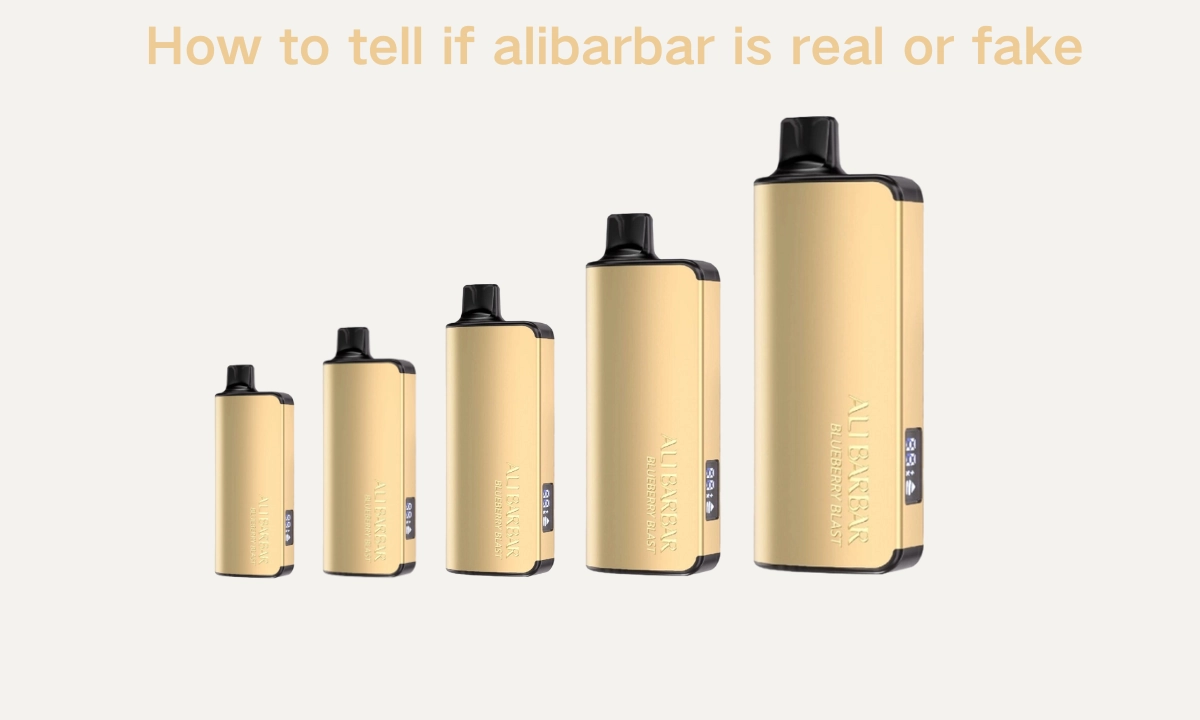 With ALIBARBAR products becoming increasingly recognisable, buyers may come across devices with different packaging, labels, security codes and finishes.
This raises an important question:
How can you tell if an ALIBARBAR is real or fake?
There is no single visual detail that can guarantee authenticity. Packaging can change between production batches, and counterfeit products may imitate logos, colours and security labels.
The better approach is to check several details together—including the packaging quality, security label, QR code, verification code and device finish.
This guide explains the main warning signs to look for when checking an ALIBARBAR product.
Why ALIBARBAR Authenticity Matters
Counterfeit vaping products can differ significantly from the products they attempt to imitate.
They may use different components, batteries, liquids or manufacturing processes, and the information printed on the packaging may not accurately describe what is inside.
The Australian Government notes that illegal e-cigarettes may not accurately list their liquid ingredients and can contain chemicals that have not been tested for safety.
For this reason, authenticity should not be judged by appearance or flavour alone.
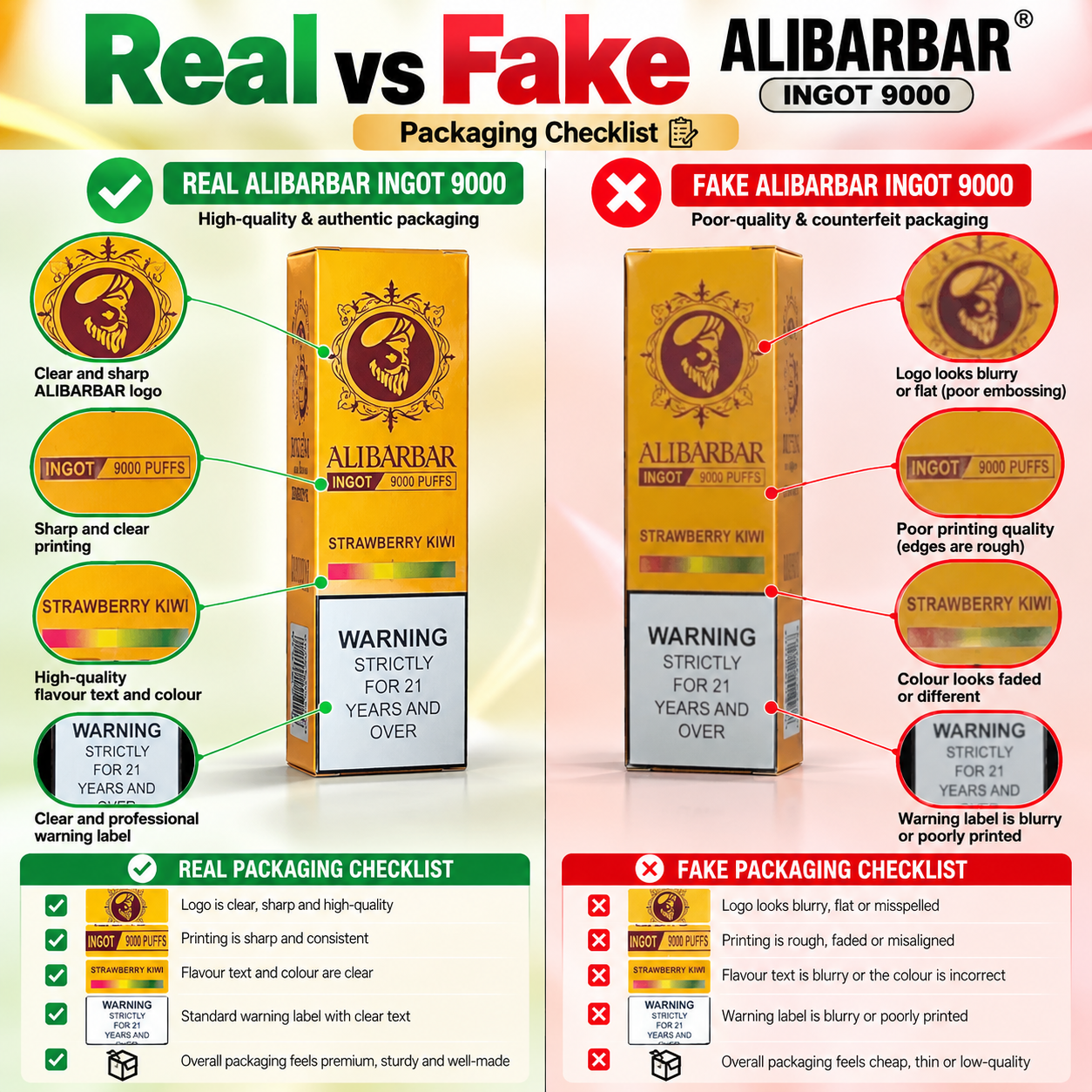
1. Check the Packaging Carefully
The packaging is the first place to start.
Look closely at:
- Logo quality
- Font consistency
- Colour accuracy
- Printing sharpness
- Product information
- Batch information
- Security labels
- Packaging seals
Poor-quality counterfeit packaging may show blurry printing, uneven colours, spelling errors or inconsistent alignment.
Important
A packaging difference does not automatically mean the product is fake.
Manufacturers can update packaging between production batches or markets.
Instead of relying on one difference, compare several authenticity indicators together.
2. Look for the Security Label
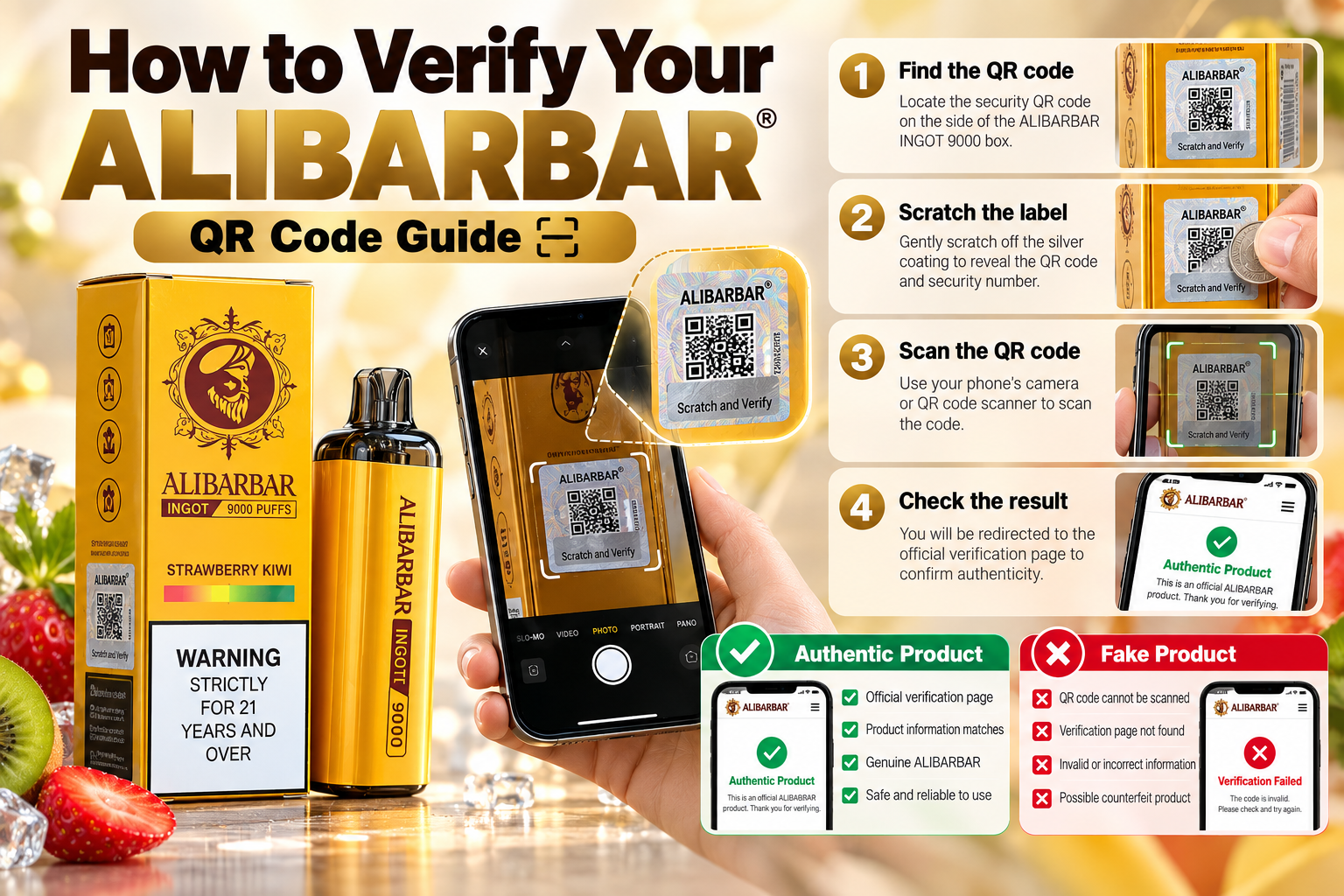
Check the outer packaging for any security or authenticity label provided by the manufacturer.
Depending on the product version, this may include:
QR Code
Scratch-off Verification Code
Security Sticker
Holographic Element
Look carefully at the printing quality and positioning.
A poorly printed, damaged or suspiciously placed security label should encourage further verification.
However, remember:
A security sticker alone does not prove that a product is genuine.
Counterfeit packaging can imitate security labels too.
3. Scan the QR Code Carefully
A QR code can be one of the most useful authentication tools—but only when it leads to the expected manufacturer verification system.
Use your phone's camera to scan the code.
Before entering any information, check the website that opens.
Look for:
✓ A legitimate manufacturer verification destination
✓ Correct spelling of the website address
✓ A normal HTTPS connection
✓ A functioning verification page
Be cautious if:
✕ The QR code redirects to an unrelated website
✕ The website address contains strange spelling
✕ The page immediately asks for unnecessary personal information
✕ The verification page does not function properly
Counterfeit packaging can contain QR codes, so “the QR code works” is not enough by itself.
4. Check the Verification Code
Some packaging may contain a unique verification code underneath a scratch-off security layer.
If your product includes one, reveal the code carefully and enter it through the appropriate manufacturer verification channel.
Possible results may include confirmation that the code is recognised, an invalid-code warning, or other information about previous verification attempts.
Pay attention to:
Recognised Code
This is a positive indicator, although you should still inspect the rest of the product.
Invalid / Unrecognised Code
Double-check that the code was entered correctly. If it still fails, investigate further before using the product.
Repeated Verification Warning
If a system indicates that the same security code has already been checked unexpectedly many times, further verification may be appropriate.
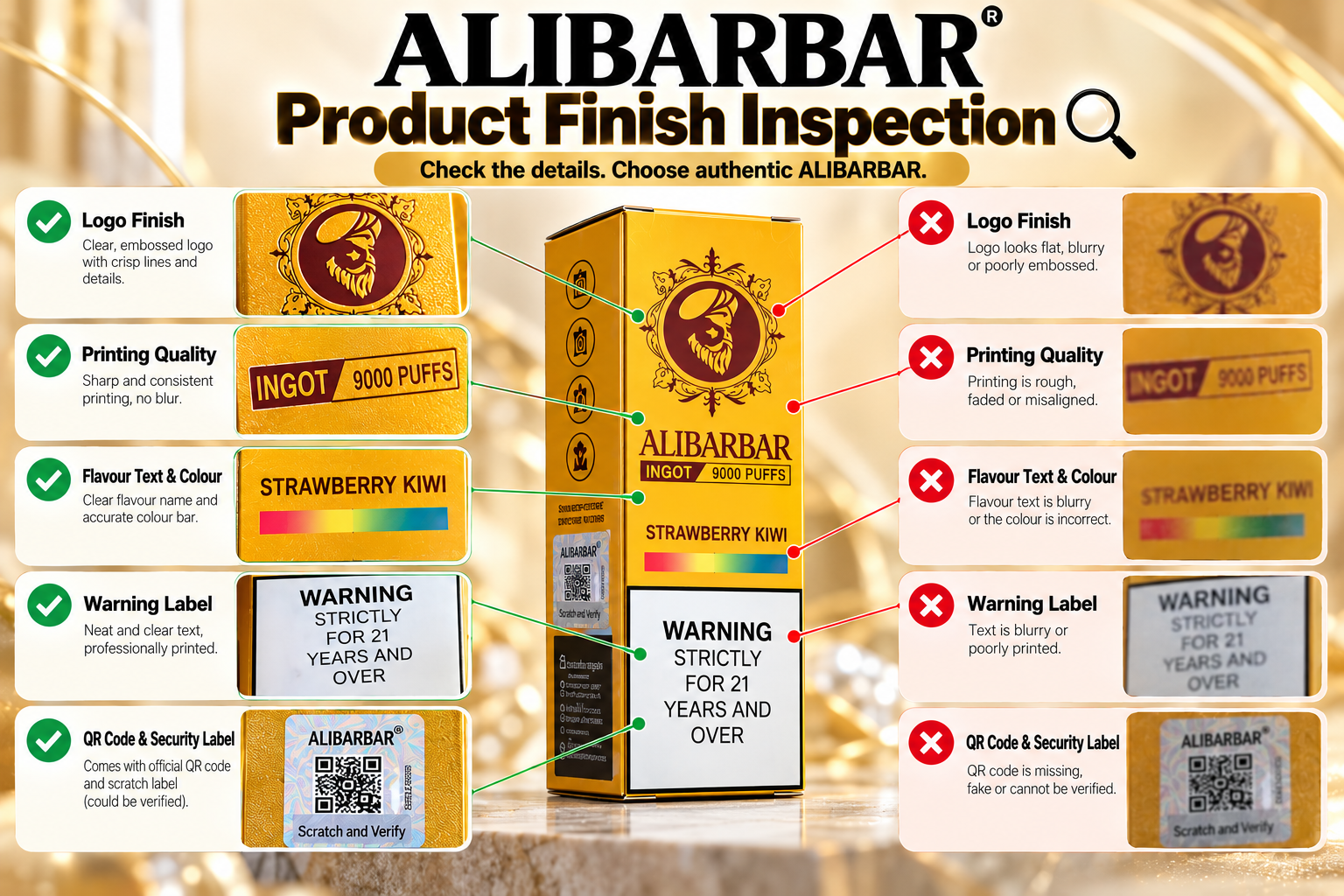
5. Inspect the Device Build Quality
After checking the packaging, inspect the physical device.
ALIBARBAR products generally have distinctive body designs, printing and finishing.
Look closely at:
Device Body
Check whether the exterior panels fit together evenly.
Large gaps, loose components or unusually rough edges can be warning signs.
Mouthpiece
The mouthpiece should appear properly fitted without obvious manufacturing defects.
Printing
Check:
- ALIBARBAR logo
- Model name
- Letter spacing
- Printing alignment
- Surface finish
Poor copies may have inconsistent fonts or noticeably blurred printing.
Display & Ports
For models featuring screens or charging ports, check whether these elements are positioned neatly and consistently.
6. Compare It With Reliable Product Images
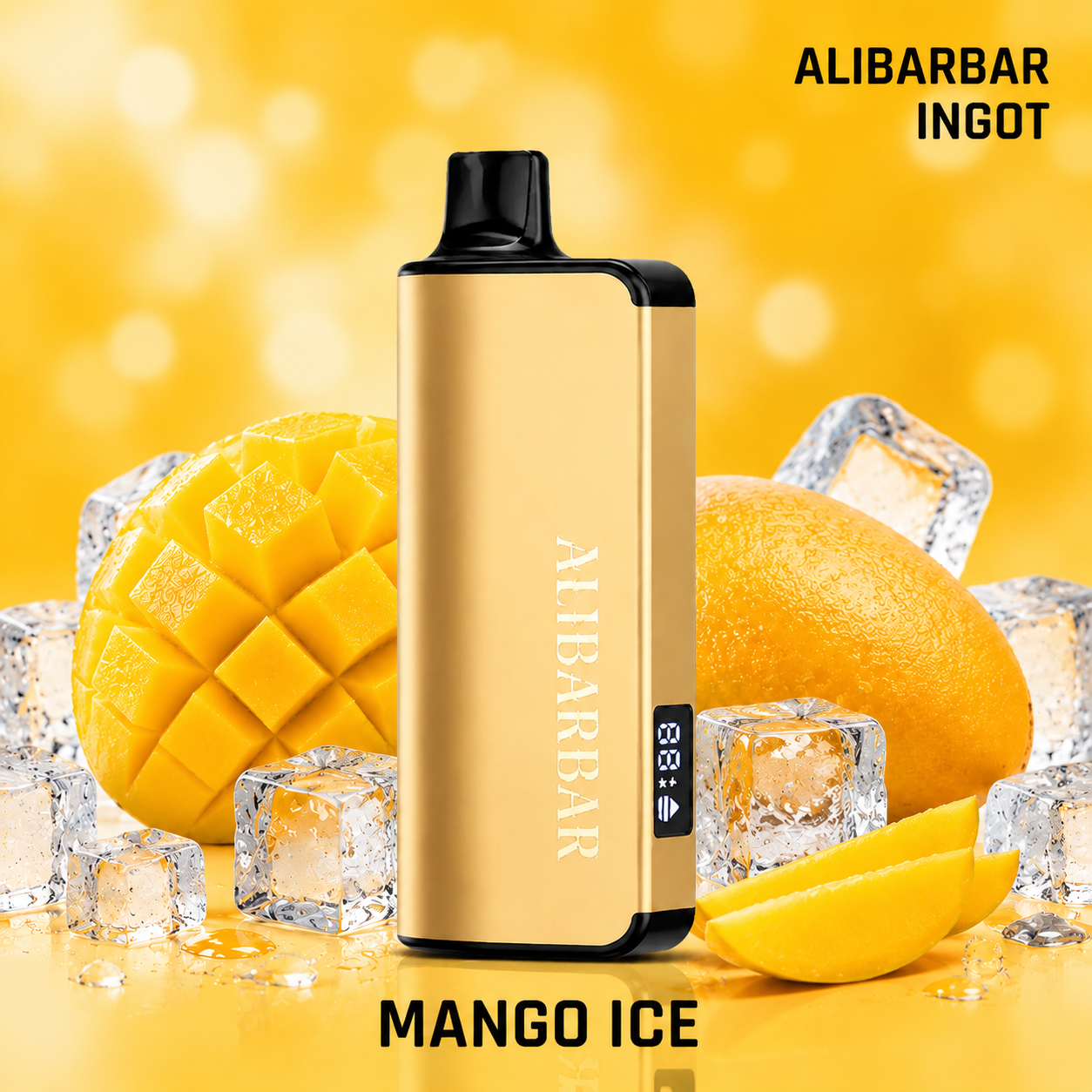
If something looks unusual, compare the product with reliable reference images for the same model.
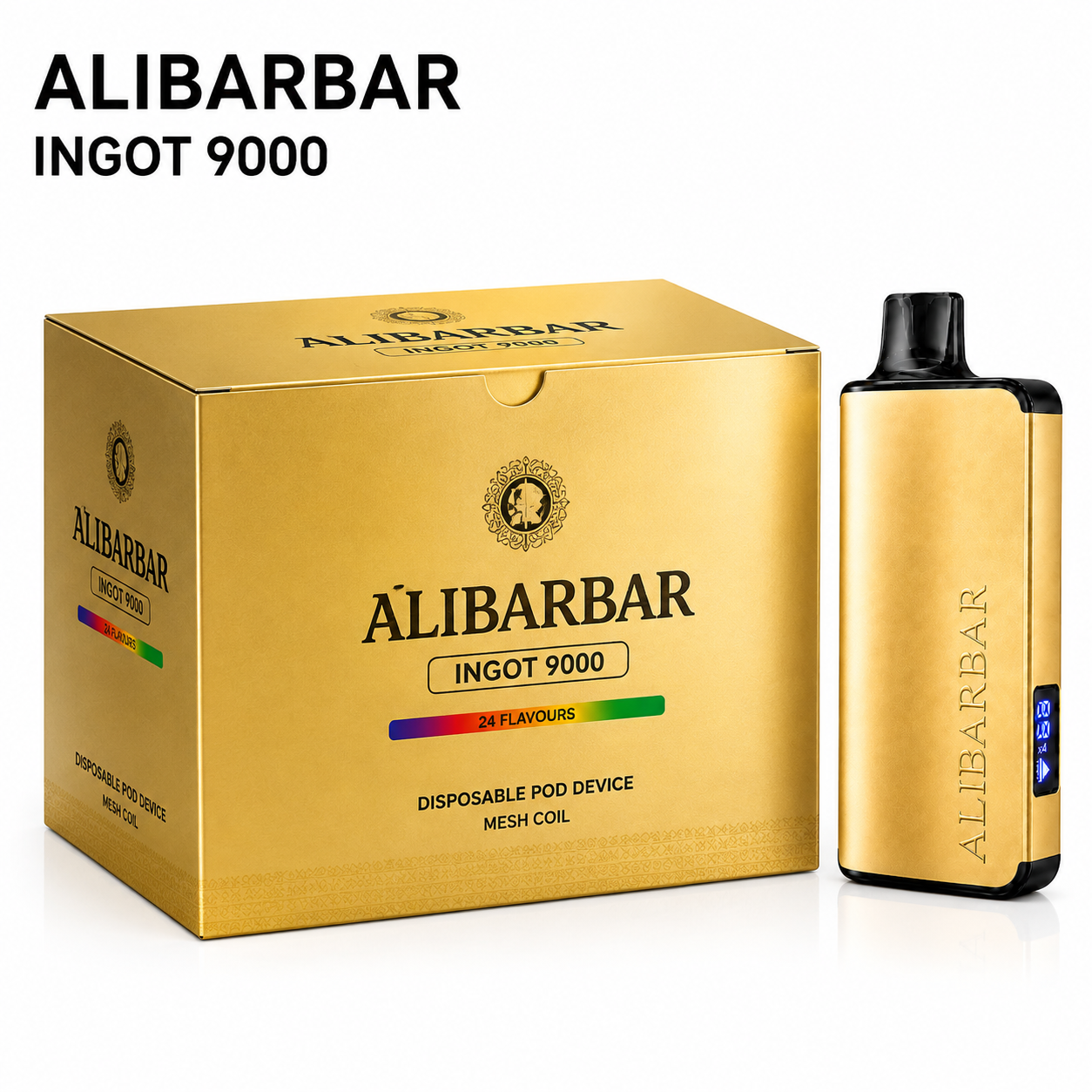
For example, when checking an ALIBARBAR INGOT 9000, compare:
- Overall shape
- Mouthpiece design
- Logo position
- Screen position
- Body proportions
- Colour
- Packaging layout
Be sure you're comparing the same model and version.
An ALIBARBAR INGOT 9000 should not be compared with a different ALIBARBAR model because the design can be substantially different.
Production revisions can also exist, so small differences alone should not be treated as proof of counterfeiting.
7. Don't Use Flavour Alone to Decide Whether It's Fake
The original version of this guide suggested taking a small puff to determine whether the product was genuine.
That's not a reliable authentication method.
Flavour can change because of:
- Product age
- Storage temperature
- Storage conditions
- Production batch
- Coil condition
- Liquid condition
Therefore:
Different flavour ≠ automatically fake.
Similarly:
Normal flavour ≠ automatically genuine.
If authenticity is uncertain, verify the packaging and security information rather than relying on taste.
8. Be Careful With Prices That Look Unusually Low
Price can sometimes provide context, but it should never be used as definitive proof.
A significantly lower price could result from clearance stock, older inventory or other legitimate reasons.
At the same time, unusually cheap products from an unknown source deserve additional scrutiny.
Instead of asking only:
“Is the price too cheap?”
Ask:
“Can I verify where this product came from?”
9. Check the Seller and Product Source
Knowing where a product originated can help when investigating authenticity.
Keep:
- Order confirmation
- Product packaging
- Batch information
- Security code
- Payment receipt
- Photos of the product
If you later suspect that a product is counterfeit, these records can make verification easier.
For Australian readers, there is an additional legal consideration. Under the current national framework, vaping products can legally be supplied only through participating pharmacies for smoking cessation or management of nicotine dependence. Other businesses such as vape shops, tobacconists and convenience stores cannot legally sell vaping products. Single-use disposable vapes cannot be purchased through pharmacies.
Adults aged 18 or over may access certain therapeutic vapes containing 20 mg/mL nicotine or less from participating pharmacies without a prescription where state or territory law allows and the pharmacist determines supply is clinically appropriate. Products above 20 mg/mL require a prescription.
Quick ALIBARBAR Authenticity Checklist
| What to Check | More Reassuring | Warning Sign |
|---|---|---|
| Packaging | Sharp, consistent printing | Blurry or inconsistent printing |
| Security Label | Clear and intact | Missing, damaged or suspicious |
| QR Code | Expected verification destination | Unknown or suspicious website |
| Verification Code | Recognised by verification system | Invalid or unrecognised |
| Logo & Fonts | Consistent appearance | Poor spacing or obvious errors |
| Device Finish | Even seams and clean finish | Rough edges or large gaps |
| Product Details | Consistent with known version | Major unexplained differences |
Remember: no single item in this table can prove authenticity on its own.
What Should You Do If You Suspect a Fake ALIBARBAR?
If several warning signs appear at the same time, avoid relying on the device itself to determine authenticity.
Instead:
- Stop using the questionable device.
- Keep the original packaging.
- Photograph the product and security information.
- Keep the verification code and purchase records.
- Check the manufacturer-provided verification information.
- Contact the appropriate manufacturer or supplier channel if further confirmation is needed.
Do not dismantle the device to check its internal components. Vape devices contain lithium-ion batteries, and damaging or puncturing the battery can create additional safety risks.
Frequently Asked Questions
How can I tell if my ALIBARBAR is real?
Start by checking the packaging, security label, QR code or verification code, followed by the physical build quality of the device. Use several indicators together rather than relying on one feature.
Does a QR code mean my ALIBARBAR is genuine?
Not necessarily.
A counterfeit package can also contain a QR code. Check where the QR code redirects and whether the verification information is consistent with the manufacturer's expected system.
Can fake ALIBARBAR products copy the packaging?
Yes. Counterfeit products may imitate logos, colours, product images and security elements. This is why packaging appearance alone isn't enough.
Is a different package automatically fake?
No.
Packaging may change between markets, production batches or product revisions. Look for multiple inconsistencies before drawing a conclusion.
Can I tell whether an ALIBARBAR is fake by the flavour?
Flavour alone is not a reliable authentication method. Storage, age and production differences can affect taste.
What should I do if the verification code doesn't work?
Check that you entered the code correctly and that you're using the expected verification destination. If it remains invalid, keep the product and packaging and seek further verification before using it.
Final Thoughts
Learning how to tell if an ALIBARBAR is real or fake is not about finding one magic sign.
A better authenticity check combines:
Packaging → Security Label → QR Code → Verification Code → Device Finish → Product Source
The more of these details that match the expected product information, the more information you have for assessing authenticity.
If several details look suspicious—particularly an invalid security code, questionable QR destination, poor packaging and noticeably inconsistent construction—avoid using the device until you can verify it further.
For Australian readers, remember that authenticity and legal supply are separate questions: even a genuine branded disposable vape is not necessarily a product that can lawfully be retailed under Australia's current therapeutic vaping framework.