
How Much Nicotine Is in an IGET Bar? A Guide to Vape Nicotine Strength
If you have ever looked at an IGET Bar and wondered “How much nicotine is actually in this vape?”, you are not alone.
Nicotine labels can sometimes be confusing. You might see nicotine expressed as 5%, 50 mg/mL, 20 mg/mL or 2%, while another product simply lists a nicotine strength without explaining what it means.
In this guide, we'll explain how nicotine strength works, look at commonly advertised IGET Bar nicotine concentrations, and explain what Australian users should know about current vaping regulations.
Important: Nicotine is addictive. Product specifications can vary by market and batch, so always check the original packaging rather than assuming every IGET device has the same nicotine concentration.
What Is an IGET Bar?
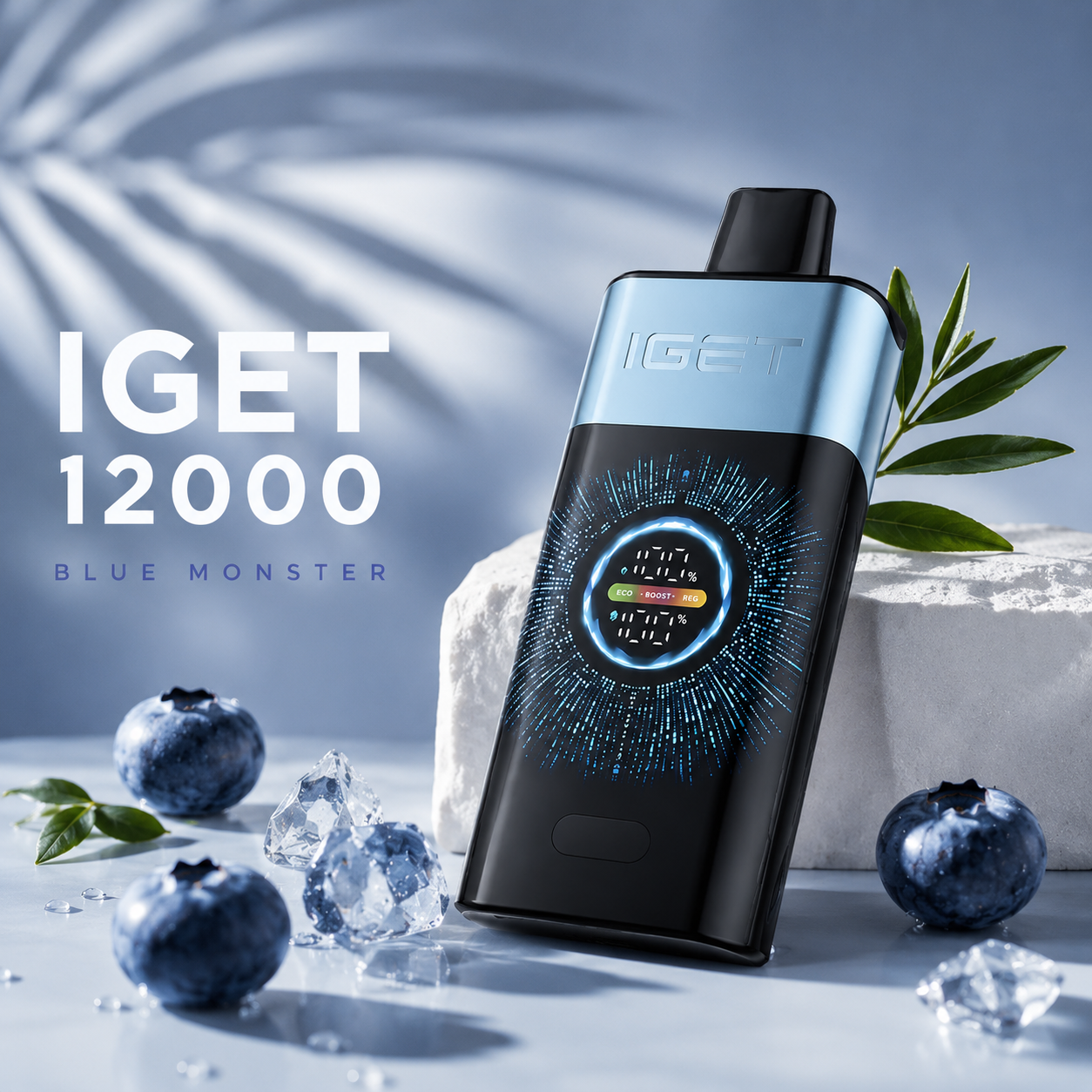
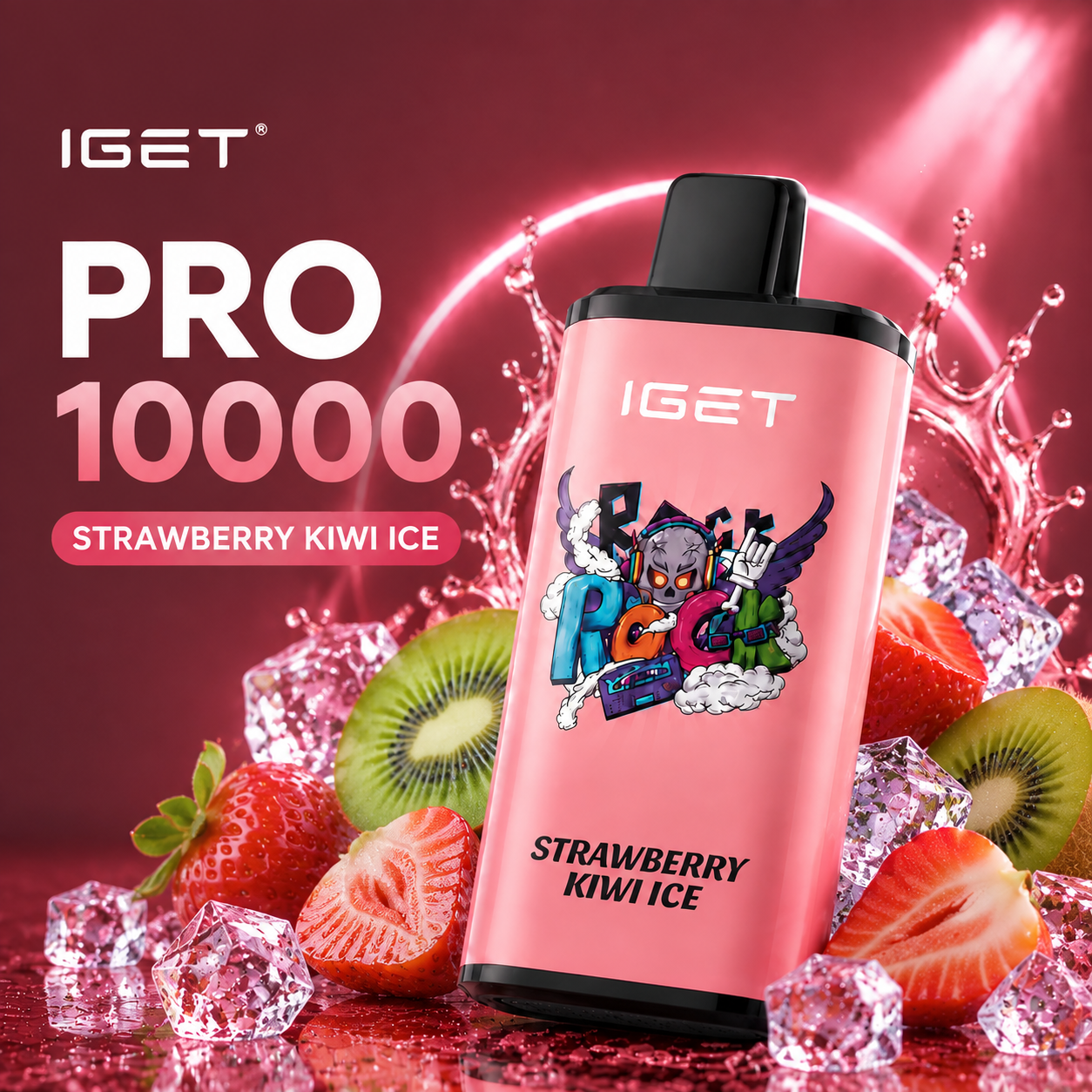
IGET Bar is a range of pre-filled vaping devices available in a variety of models and specifications internationally.
Different IGET models may vary in:
- Puff count
- E-liquid capacity
- Battery capacity
- Nicotine concentration
- Device size
- Flavour options
That means there is no single nicotine figure that applies to every product carrying the IGET name.
For example, currently available product information for the IGET Bar 3500 lists a nicotine concentration of 5% (50 mg/mL), 12 mL of e-liquid and up to 3,500 puffs.
Always check the packaging of the specific device you have.
Understanding Nicotine Strength
Before comparing different IGET devices, it helps to understand how nicotine is measured.
What Does mg/mL Mean?
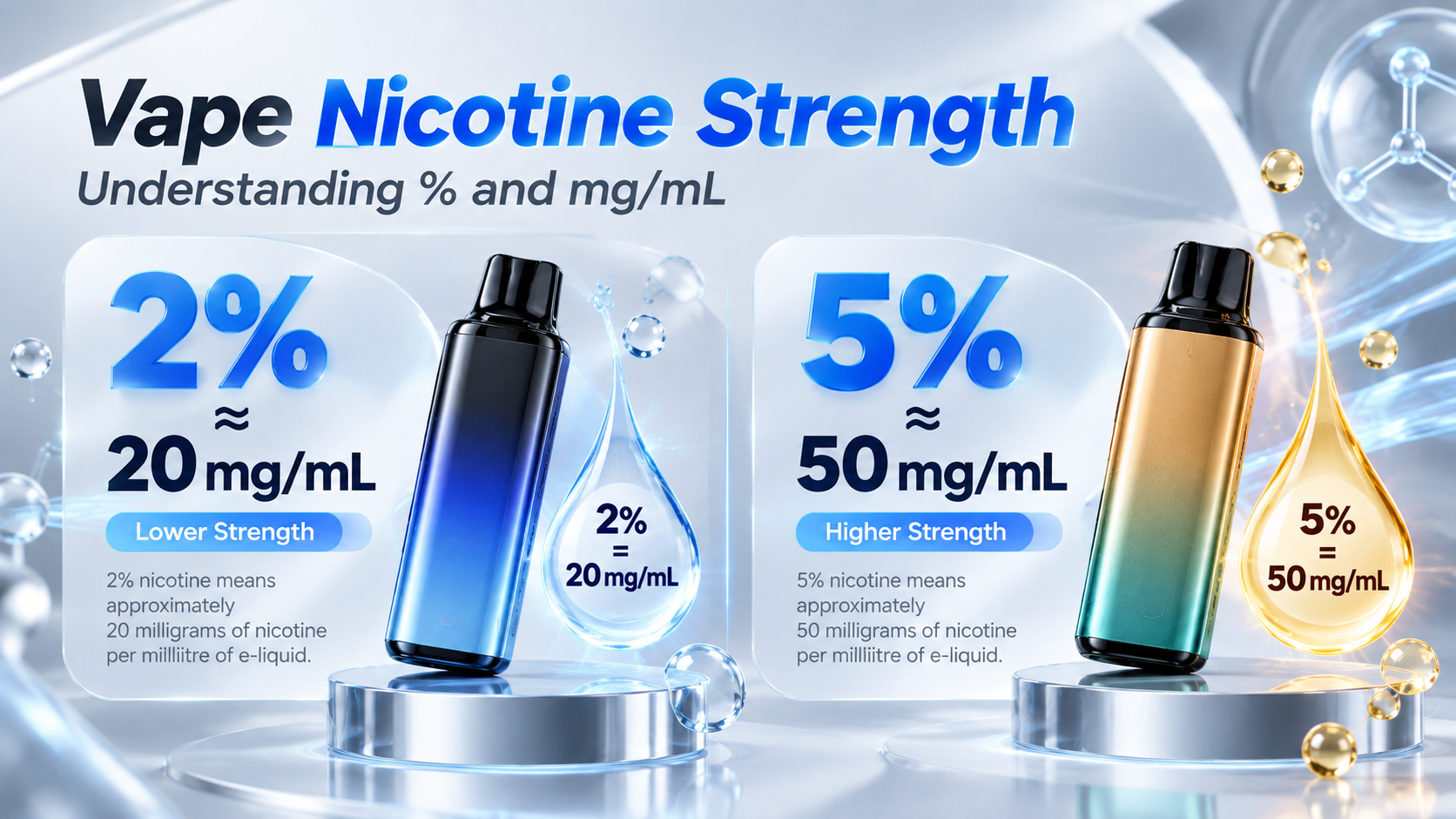
mg/mL means milligrams of nicotine per millilitre of e-liquid.
For example:
20 mg/mL = 20 milligrams of nicotine per millilitre of e-liquid.
If a liquid contained 10 mL at a concentration of 20 mg/mL, the liquid would contain:
20 × 10 = 200 mg of nicotine in total.
Importantly, this does not mean that a person absorbs all 200 mg.
The amount actually absorbed depends on factors including the device, aerosol generation and individual use patterns.
What Does 5% Nicotine Mean?
This is one of the most common sources of confusion.
A nicotine concentration advertised as:
5% nicotine
is generally equivalent to approximately:
50 mg/mL
Likewise:
2% ≈ 20 mg/mL
So when comparing vape labels, you may see the same concentration presented in different ways.
| Nicotine Label | Approx. Concentration |
|---|---|
| 0% | 0 mg/mL |
| 1% | 10 mg/mL |
| 2% | 20 mg/mL |
| 3% | 30 mg/mL |
| 5% | 50 mg/mL |
How Much Nicotine Is in an IGET Bar?
This depends on the exact product.
One currently advertised specification for the IGET Bar 3500 lists:
Nicotine concentration: 5% / 50 mg/mL
E-liquid capacity: 12 mL
Puff count: Up to 3,500
Using those advertised figures:
50 mg/mL × 12 mL = 600 mg
That represents the nominal amount of nicotine contained in the full volume of e-liquid—not the amount a person necessarily absorbs.
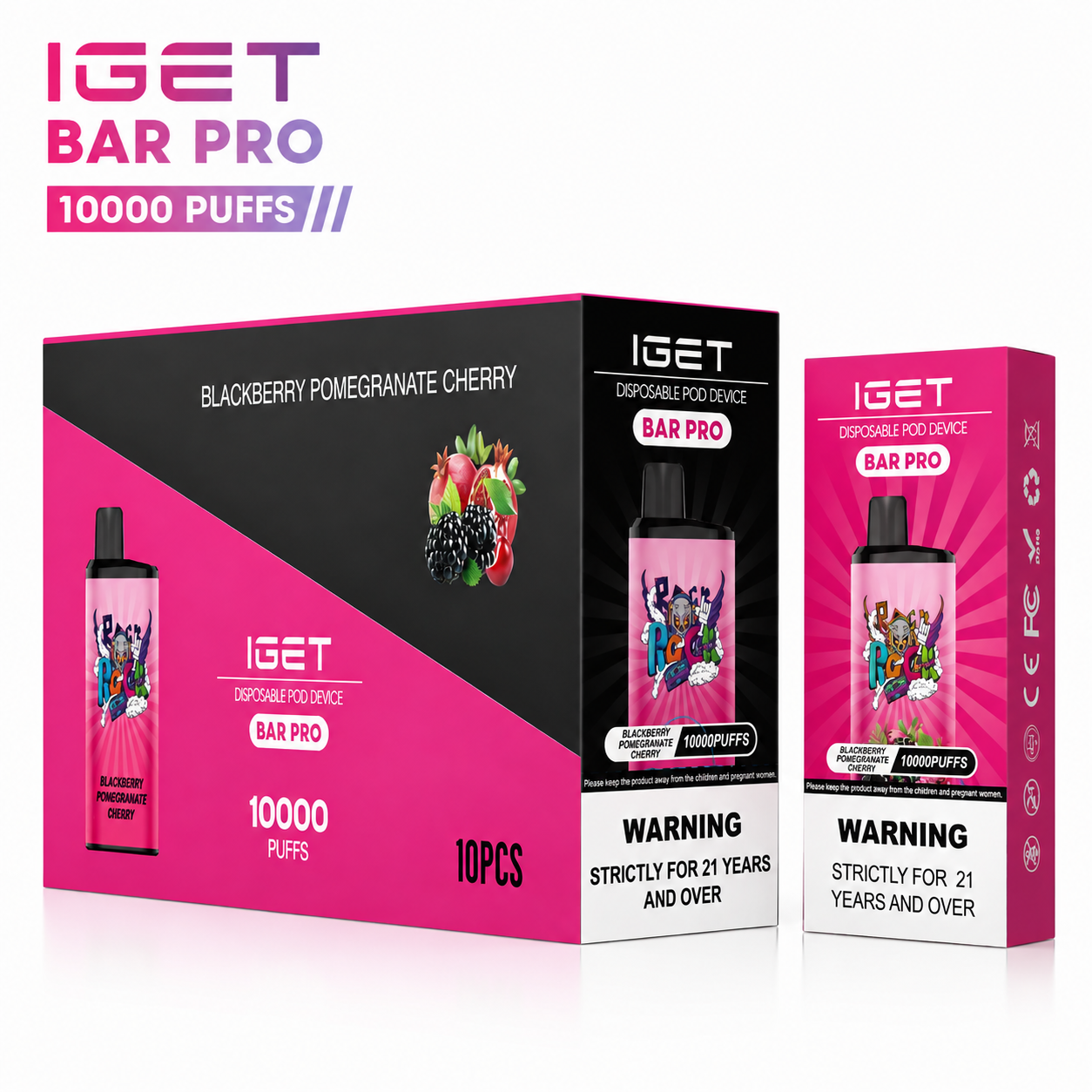
What About IGET Bar Pro?
This is where you should be careful with information found online.
Specifications for IGET products can differ between markets and sellers, and third-party listings are not always consistent.
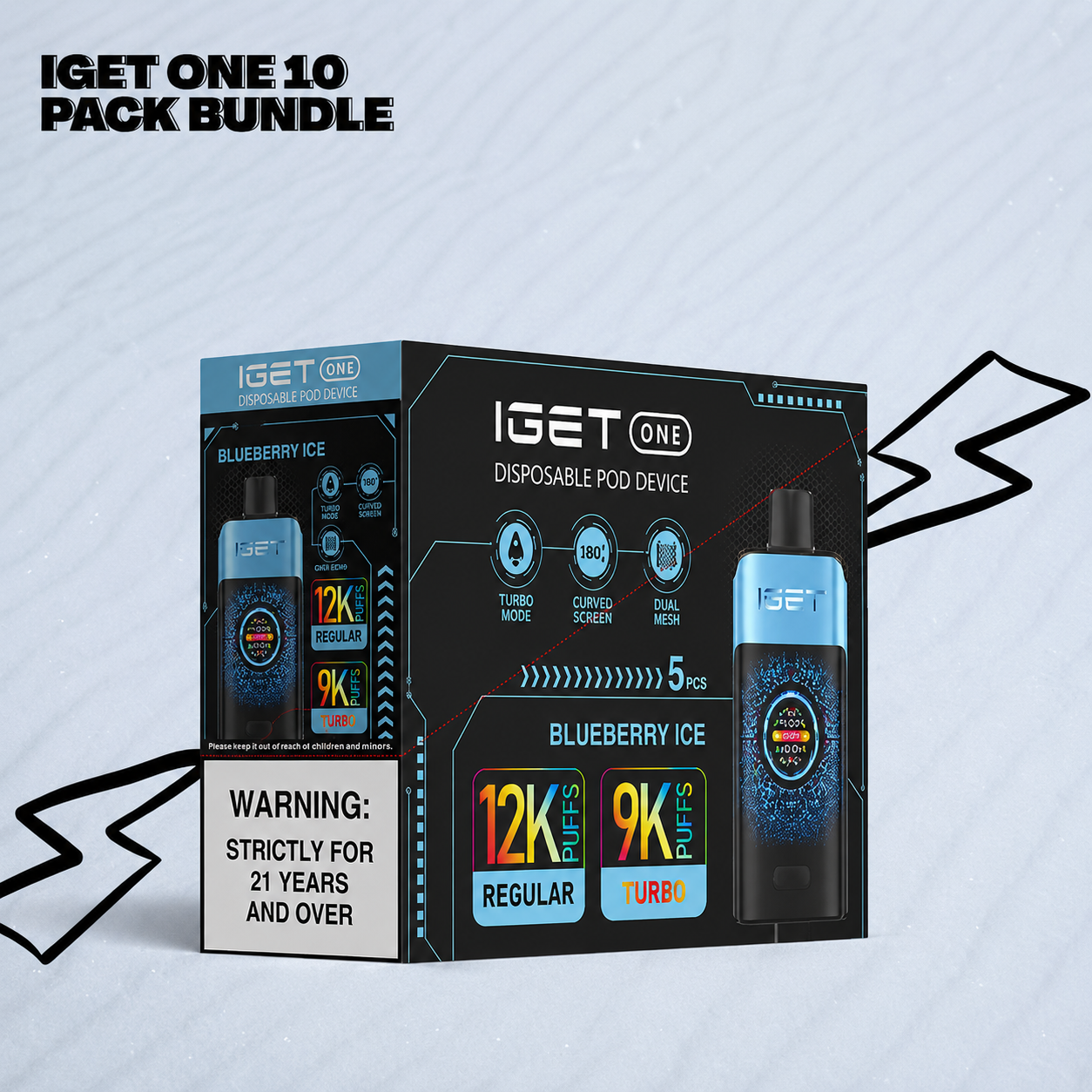
Rather than assuming an IGET Bar Pro, IGET One or IGET Moon contains the same nicotine concentration as an IGET Bar 3500, check the packaging for wording such as:
Nicotine: 20 mg/mL
or
Nicotine: 5% / 50 mg/mL
The label on the actual product is more useful than a generic online nicotine chart.
Nicotine Salt vs Freebase Nicotine
Many vaping liquids use nicotine salts, while traditional refillable e-liquids have historically also used freebase nicotine.
Freebase Nicotine
Freebase nicotine is a conventional form of nicotine used in many older e-liquids.
At higher concentrations it can produce a stronger throat sensation.
Nicotine Salts
Nicotine salts are widely used in vaping products and can produce a different sensory experience compared with equivalent concentrations of freebase nicotine.
However, a smoother sensation should not be interpreted as meaning that the product contains less nicotine.
Always use the labelled concentration when assessing nicotine strength.
Does Puff Count Tell You How Much Nicotine You're Getting?
No.
A common mistake is to assume that a device advertised as 10,000 puffs necessarily contains twice as much nicotine as a 5,000-puff device.
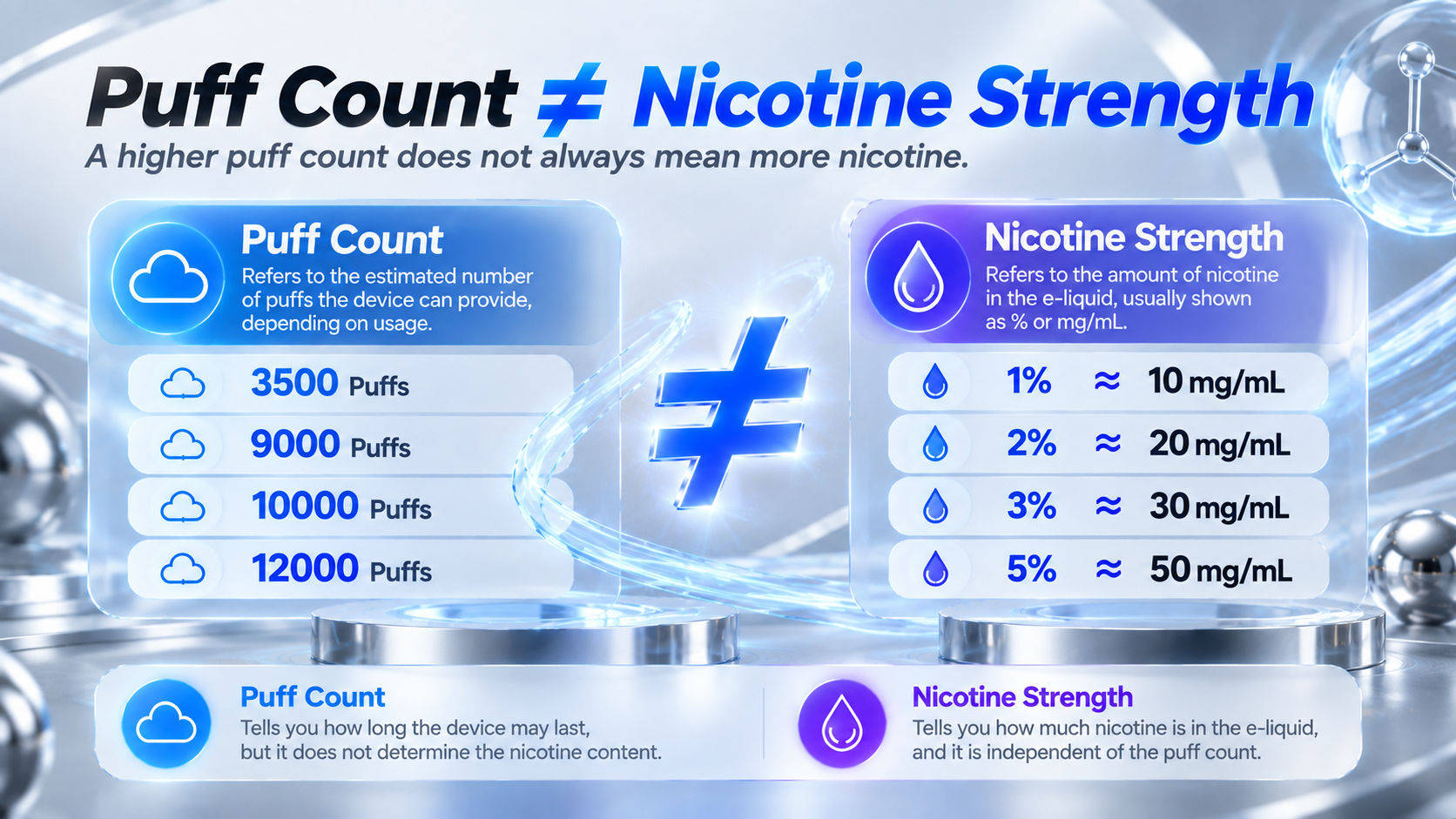
Puff count and nicotine concentration measure completely different things.
Puff count is an estimate of device usage.
Nicotine concentration tells you how much nicotine is present per millilitre of e-liquid.
The amount delivered in an individual puff can vary depending on:
- Puff duration
- Puff intensity
- Coil design
- Power output
- Airflow
- E-liquid composition
- Device design
For this reason, advertised puff counts should not be used to calculate an exact nicotine dose per puff.
Is 5% Nicotine Strong?
A concentration of 5% (approximately 50 mg/mL) is substantially higher than 2% (20 mg/mL).
This distinction is particularly important in Australia because nicotine concentration affects how therapeutic vaping products can legally be supplied.
Under Australia's current framework, participating pharmacists may supply certain therapeutic vapes containing 20 mg/mL or less to adults aged 18 or older without a prescription, where clinically appropriate and subject to state and territory requirements.
Products above 20 mg/mL require a prescription. The TGA also states that therapeutic vaping products above 50 mg/mL are not permitted.
Australian Vape Laws: What You Need to Know
Australia's vaping laws changed substantially in 2024.
As of 2026, vaping products can legally be supplied only through pharmacies for smoking cessation or management of nicotine dependence. This restriction applies to vaping products whether or not they contain nicotine.
For adults aged 18 and over, participating pharmacies may supply qualifying therapeutic vapes containing 20 mg/mL nicotine or less without a prescription, subject to pharmacist consultation and relevant state or territory law.
A prescription is required for concentrations above 20 mg/mL, and additional rules apply to people under 18.
There is another particularly important point for anyone searching for IGET Bar products:
Single-use disposable vapes cannot legally be purchased from Australian pharmacies.
Australia's therapeutic vaping products are also subject to product and packaging requirements, and permitted flavours are restricted to mint, menthol and tobacco.
For current rules, check the Australian Government vaping laws and the TGA vaping information for individuals and patients.
How Can I Check the Nicotine Strength of My Vape?
Before using a vaping product, check its packaging.
Look for information such as:
Nicotine: 20 mg/mL
Nicotine: 2%
or
Nicotine: 50 mg/mL / 5%
Do not determine nicotine strength from puff count alone.
If the nicotine concentration is missing, unclear or inconsistent with the packaging, avoid guessing.
Does Higher Nicotine Mean More Puffs?
No.
Nicotine concentration does not determine how many puffs a device can produce.
A device's advertised puff count is influenced more directly by factors such as:
- E-liquid capacity
- Battery capacity
- Coil efficiency
- Power mode
- Puff duration
Therefore:
Higher nicotine ≠ higher puff count.
Similarly:
Higher puff count ≠ higher nicotine concentration.
Frequently Asked Questions
How much nicotine is in an IGET Bar?
It depends on the model and market. One current IGET Bar 3500 listing specifies 5% nicotine, equivalent to 50 mg/mL. Check the packaging of your particular device because specifications can vary.
Is 5% nicotine the same as 50 mg/mL?
Approximately, yes. A 5% nicotine concentration is generally expressed as approximately 50 mg/mL.
Is 2% nicotine equal to 20 mg/mL?
Yes. A 2% concentration corresponds to approximately 20 mg/mL.
Does a 10,000-puff vape contain more nicotine than a 3,500-puff vape?
Not necessarily. Puff count and nicotine concentration are separate specifications. Compare the mg/mL figure and e-liquid volume rather than puff count alone.
Can I legally buy an IGET disposable vape from an Australian vape shop?
Under Australia's current national framework, non-pharmacy businesses cannot legally sell vaping products, and single-use disposable vapes cannot be purchased through pharmacies either.
Final Thoughts
So, how much nicotine is in an IGET Bar?
There isn't one answer that applies to every IGET model.
An IGET Bar 3500 may be labelled 5% / 50 mg/mL, while other products and markets may use different concentrations. The safest approach is to check the nicotine concentration printed on the actual packaging rather than relying solely on the product name or advertised puff count.
For Australian readers, it is also important to distinguish international IGET product specifications from products that can legally be supplied under Australia's therapeutic vaping framework.
Nicotine is addictive, and if you're using vaping to quit smoking or manage nicotine dependence, an Australian pharmacist or healthcare professional can help you understand the legal therapeutic options and an appropriate nicotine strength.